

Guide to earning your online accounting bachelor’s degree
Table of Contents
What is an online bachelor’s in accounting? | What to expect in your online program | Pros and cons | Career paths | How to succeed in your program | Choosing the right program
Why we love online accounting bachelor’s
An online bachelor’s degree in accounting can be a springboard to numerous careers in the business and finance industries. As an accountant or other finance professional, you can expect to maintain and analyze financial records and data for a business, the public or some other entity. These roles typically require having a bachelor’s degree to enter the field. An undergraduate degree is also necessary to qualify for many of the certifications within the industry.
Earning an undergraduate degree in accounting remotely can be a game changer for working adults or people who simply have other obligations that make it challenging—or downright impossible—to get an in-person education.
“Most of our students in our program are adult learners, and they have to balance their personal and work responsibilities,” said Dr. Tanae Acolatse, Program Manager for the Bachelor of Science in Accounting program at Colorado State University (CSU) Global.
If you’re thinking about earning your bachelor’s degree in accounting online, it’s important to understand what kind of knowledge and skills you’ll learn, how to succeed in the online learning environment, what kinds of careers you could pursue with your education and much more.
Are you ready to find your new college program?
What is an online bachelor’s degree in accounting?
A bachelor’s in accounting is an undergraduate degree program, typically lasting about four years of full-time study, designed to prepare students for various financial and/or business occupations. With online education on the rise, many people nowadays are turning to online degree programs to earn their bachelor’s degree in accounting.
Accounting online four-year degrees can be one of two types: a Bachelor of Arts (BA) or a Bachelor of Science (BS). No matter what major they are tied to, BA degrees tend to put a greater focus on a more well-rounded liberal arts education. In a BA program, therefore, you may have to take more language and social sciences classes. Conversely, a BS program usually requires students to take more rigorous science and mathematics courses. Although accounting degrees by their very nature tend to be BS programs, both kinds of degrees have their own advantages for accounting majors.
Eligibility requirements
Prospective students who want to get their bachelor’s degree in accounting need to apply to the academic institution first. At a minimum, most four-year institutions require applicants to have a high school diploma or GED, along with a minimum Grade Point Average (GPA) from their high school coursework. On top of that, many schools require applicants to submit scores from the SAT or ACT and possibly letters of recommendation from former teachers as well.
What to expect from this undergraduate program
In an online bachelor’s degree in accounting, students can expect to learn both fundamental and intermediate or advanced topics in the field. Programs generally include a combination of core accounting coursework, general education courses and elective courses.
“In any bachelor’s degree accounting program, you can expect to learn the fundamentals of accounting and that includes financial accounting, managerial accounting, taxation, government and nonprofit accounting, auditing and accounting information systems,” Acolatse said. “Some of the other skills that are developed when you’re in this program include data analytics, problem-solving, technical proficiency with accounting software and then a strong understanding of ethics.”
This degree program provides foundational knowledge of the accounting industry that every professional needs to know. This makes this degree option a great choice for students interested in pursuing a career in accounting.
Accounting curriculum and coursework
Bearing in mind that each program’s curriculum is unique, accounting students can anticipate taking courses in the following subjects as part of their degree requirements:
- Accounting fundamentals
- Intermediate accounting
- Introduction to marketing
- Microeconomics
- Macroeconomics
- Business law
- Management accounting
- Data analytics
- Government accounting
- Information systems for accounting
One major skill that you’ll hone throughout an accounting degree is the arguable kingpin of accounting software: Microsoft Excel.
“One of the key skills that is a must-have for all accounting students is Microsoft Excel. Over the years we’ve talked about Tableau and now we have Power BI and all of this different software, but Microsoft Excel has stood the test of time,” Acolatse said. “You have to have that in the accounting field to be successful, at least up to intermediate.”
Other important courses
In any bachelor’s degree program, students are expected to take several general education courses to ensure that they have the requisite skills needed to succeed throughout the rest of the program. This often includes introductory courses in English composition and mathematics, as well as some classes of the student’s choice in the natural and social sciences.
Although they may not seem as important as your accounting classes, some of these classes cultivate skills that can be just as important to your long-term success.
“Another key skill that often we don’t think about when we talk about accounting is developing communication skills, both written and verbal,” Acolatse said. “Those are very important for accounting students because the shift has been made from accounting being someone who is just a number cruncher. You have to now become the communication expert, so you are doing that accounting work but then you also have to be the analyst, and with that comes communicating some complex financial information that has to be communicated in layman’s terms.”
Beyond your degree’s general education requirements, students usually must fill up the rest of their schedule with elective courses. As the name implies, these can be in whatever you want, from an accounting specialization to something else entirely.
Experiential learning opportunities
As part of a program’s core accounting coursework, you may have to participate in an internship which allows you to apply what you’ve learned in a real-world setting under the direction of an experienced accounting professional. These kinds of experiential learning opportunities can be invaluable for several reasons.
First, they allow you to get a taste of what working in the field is really like which can help you figure out what kind of role you may like to take on after graduation. In addition, they provide experience that can bolster a resume once you start applying for jobs and make you a more attractive job candidate. Internships and other experiential learning opportunities are usually completed in the student’s final year of their degree program.
Pros and cons of getting your accounting degree online
The appeal of online learning in today’s modern world is most often summed up in one simple word: flexibility.
“In online programs, number one is flexibility for students to continue education and be anywhere in the world,” Acolatse said. “At CSU Global, for example, our program offers every course every term. That makes it easier for our students to take a class when they can. And then additionally we have short terms—our terms are eight weeks at a time—and that allows students to enroll in the programs throughout the year.”
Another advantage of online learning is that many courses are conducted asynchronously. This means that there is no set time the student must log on and do their work. They can complete the course material on their own schedule.
“With some students, the online environment gives them more time to do their work from the comfort of their homes,” Acolatse said. “They can participate at any time in instructor-led discussions and then interact with their peers, but everything is based on weekly communication or interaction with the professor and then their peers.”
Given society’s focus on remote work in the wake of the recent global pandemic, online learning also provides another, sometimes unexpected advantage: preparing students for the remote work environment.
As enticing as all those advantages may sound, Acolatse pointed out that online learning is not for everyone.
“Students must have self-discipline in work and time management. Some students do find that the lack of face-to-face interaction can be kind of challenging and then can lead them to feel like they’re isolated or they don’t belong. Also, there may be fewer opportunities for students to have the hands-on learning experience that they may find in a brick-and-mortar institution, but in the online environment we are finding innovative solutions to really address that issue,” Acolatse said.
What can you do with an online bachelor’s in accounting?
Pursuing a career as an accountant may seem like the obvious career path for accounting graduates, but the field itself is vast and full of diverse opportunities for degree holders.
“Graduates have a wide range of careers, simply because accounting is the language of business. It doesn’t matter where you are, you have to have an accounting person,” Acolatse said. She described several different areas of accounting you could work in, including:
- Public accounting which typically involves working at an accounting firm and selling your services to the general public
- Corporate accounting where you’re doing accounting for a particular business or company
- Working for government agencies including city and state offices
- Working for nonprofits and other organizations
In any of these environments, your job title may or may not simply be an accountant.
“Some of those positions that they can look for can be auditor, tax consultant, financial analyst or management accountant. And then you can even go further than that if you have experience or certifications. You have the Certified Public Accountant (CPA)—everybody knows that one—or the Certified Management Accountant (CMA). You also have other certifications like the Certified Internal Auditor (CIA) or the Certified Fraud Examiner (CFE), so there are other certifications that are available for students after they complete their degree,” Acolatse said. “One of the things that I always say to students is in this environment, you always want to differentiate yourself from everyone else, so having a certification is key.”
How to succeed in your online accounting undergrad program
Acolatse said that she often gives five primary points of advice to students to help them maximize their success in their online degree program.
“The first one is they have to make sure that they manage their time. They need to have a regular study schedule,” Acolatse said. Since many online courses are taught asynchronously—meaning the student can complete the course content on their own time—they must be proactive about setting aside time to do their work. Even if they can only find 30-minute pockets of time in their schedule, Acolatse said, then they should take advantage of it.
Acolatse’s second piece of advice is to be as involved as you can in the online discussion boards. “The online discussion board, if you can envision this, is like an in-person classroom. That is the place where students will learn the most about the course material and they will develop relationships between instructors and peers.” Acolatse said that she still has friends she keeps in touch with—some of whom she’s still never met in person—that she first met in the online learning environment when she got her online degree in the late ‘90s.
“The third thing is they need to take advantage of all available resources. That includes virtual office hours which could be led by instructors, any tutoring services, the library, writing center (which is a part of the library), and then career counseling,” Acolatse said.
Acolatse also recommends that accounting students be deliberate with their elective courses and take classes that nurture useful skillsets. “You want to choose electives that build your skills in data analytics, communication—that could be public speaking and written communication—and then project management and so on.”
Finally, Acolatse encourages students to focus on their strengths and use them to guide you toward the areas of accounting that you could see yourself working in after graduation.
“As you’re taking your courses in accounting, the first four courses are related to the fundamentals. But once you get into the higher-level courses, those are specific areas of accounting. For example, you take a taxation course—that’s a specific area. If you’re taking government accounting, that’s another one. As you’re taking those courses, note the ones that you find interesting and you’re doing well in. Research the jobs that are related to that field. Find out what certifications are associated with it. Look for opportunities for internships and other skills that can prepare you for success. And it’s important to stay up to date on the industry trends and the software that’s happening in that area.”
Browse our vetted selection of programs
All Online Schools is an advertising-supported site. Featured or trusted partner programs and all school search finder, or match results are for schools that compensate us. This compensation does not influence our resource guides, or other editorially-independent information published on this site.
Choosing the right program for you
There are lots of factors to consider when searching for an accounting undergraduate program, but these are just a few to help you get started as you begin your search for an online bachelor’s in accounting:
Accreditation: At minimum, students should look for programs which are accredited by an accreditation body that is approved by the U.S. Department of Education. This ensures that the program meets certain educational standards and is necessary if you want to apply for any federal financial aid. On top of that, Acolatse suggests searching for accounting programs which are accredited by the Association to Advance Collegiate Schools of Business (AACSB) or the Accreditation Council for Business Schools and Programs (AABSP). “Accreditation is key. Students should really look for those programs that are affiliated with recognized bodies such as the AACSB and the ACBSP, which for us, our program is ACBSP-accredited. But having that accreditation really ensures that the education that the students are receiving meets certain standards.”
Robust curriculum: “A good program should also offer a curriculum that is industry relevant and really focused on helping those students prepare for careers in accounting,” Acolatse said. Her school’s program, for example, is endorsed by the Institute of Management Accountants (IMA). “This endorsement means that our program provides the rigor and training that prepares our students for careers in accounting, but also for the CMA exam.” Programs that prepare students for relevant industry certifications can be particularly advantageous.
Experiential learning opportunities: Check out whether accounting programs provide students with opportunities to participate in internships and other practical projects that can give them real-world experience in the field.
Reputation: There’s no harm in researching the credentials of a program’s faculty during your college search. After all, you want to be sure that you are going to learn from experienced professionals that can prepare you for life after graduation.
Sufficient student support: For online programs in particular, you want to make sure your school has sufficient resources to help you on your educational journey. This can include things like academic support services and career services. “All those pieces need to work together in order for students to be successful,” Acolatse said.
Cost-effective: College is expensive no matter how you slice it, but one of the advantages of online programs is that they tend to cost a little less than their in-person counterparts. Still, delving into a cost-comparison analysis is important in any college search. Remember, however, that the sticker price on a school’s website and brochures may not be what you actually have to pay. Only by applying to schools can you find out how much financial and other aid they can award you.
Wrapping it up
A bachelor’s degree in accounting is a step up from an online accounting associate degree and can help kickstart a variety of careers in business and finance. Attending a program on campus isn’t always possible for some people, especially those who are already working or who are juggling other personal obligations. With the many bachelor’s degrees in accounting and finance that are now being offered online, advancing your education has seldom been easier. By exploring the types of programs that are out there, their curriculum, the student support services they offer, their reputation and more, it’s possible to find an online bachelor’s in accounting program that’s the perfect fit for you and your career trajectory.

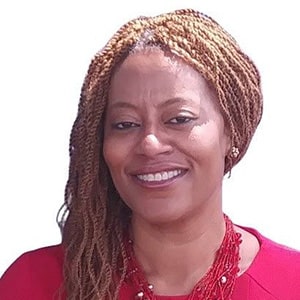
With professional insight from:
Tanae Acolatse, PhD
Lead Program Manager/Program Manager of BS in Accounting | Colorado State University Global

Are you ready for a new adventure?
Find your new school today!
All Online Schools is an advertising-supported site. Featured or trusted partner programs and all school search finder, or match results are for schools that compensate us. This compensation does not influence our resource guides, or other editorially-independent information published on this site.
All Online Schools is an advertising-supported site. Featured or trusted partner programs and all school search finder, or match results are for schools that compensate us. This compensation does not influence our resource guides, or other editorially-independent information published on this site.